
Unlocking Profit: Your Comprehensive Guide to Drop Servicing Success
Master the art of selling services without lifting a finger—build a scalable, low-overhead business today.
- 1.Key Insights into Profitable Drop Servicing
- 2.The Core Mechanics of Drop Servicing: How It Works
- 3.Strategic Steps to Launch Your Drop Servicing Venture
- 4.Understanding Drop Servicing Performance Metrics
- 5.Common Pitfalls and How to Navigate Them
- 6.Comparative Analysis of Service Niches
- 7.A Snapshot of Top Drop Servicing Niches
- 8.Visualizing Drop Servicing Success: A Deeper Dive
- 9.Frequently Asked Questions About Drop Servicing
- 10.Conclusion: Your Path to Drop Servicing Success
- 11.Recommended Further Exploration
- 12.Referenced Search Results
Key Insights into Profitable Drop Servicing
- Strategic Niche Selection is Paramount: Focus on digital services with high demand and clear deliverables, like SEO, graphic design, or video editing, where businesses consistently pay premium rates.
- The “Middleman” Advantage: Generate profit by bridging the gap between client demand and skilled freelancers, outsourcing work at a lower cost than your client charges and retaining the margin.
- Quality Control and Client Satisfaction are Non-Negotiable: Your reputation hinges on the reliability of your outsourced partners and your ability to manage expectations and ensure high-quality delivery.
- Create Your Passive Income with Drop Servicing Step-by-Step on Udemy.
.jpeg "Earn Passive Income with Wall Art")
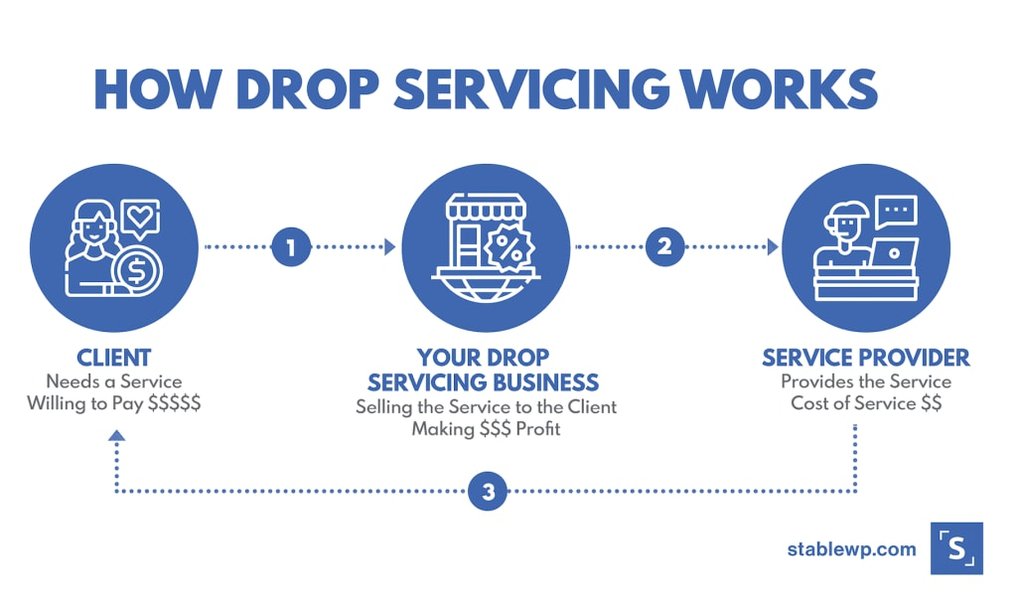
Drop servicing is an innovative business model akin to dropshipping, but instead of physical products, you’re selling services. It’s a low-risk, high-reward approach where you act as a middleman, connecting clients with skilled freelancers or agencies to fulfill service needs. Your primary role involves sales, marketing, client management, and quality assurance, while the actual service delivery is outsourced. This model allows for significant profit margins, often ranging from 30-70%, due to minimal overhead and no need for personal expertise in the service provided.

The Core Mechanics of Drop Servicing: How It Works
At its heart, drop servicing operates on a simple principle: you sell a service at one price and pay a third-party provider a lower price to execute it, pocketing the difference. This business model thrives on identifying a market need for a specific service and then efficiently fulfilling that need through outsourcing. The entire operation can often be managed online, making it highly flexible and accessible to entrepreneurs with limited startup capital.
Strategic Steps to Launch Your Drop Servicing Venture
1. Understanding the Foundational Model
Before diving in, grasp the core concept: you are the project manager and sales arm. You bridge the gap between clients who need a service and experts who can deliver it. Your value proposition lies in efficient client acquisition, clear project management, and quality assurance. This model significantly reduces startup costs and eliminates the need for you to be a specialist in every service you offer.
2. Identifying Your Profitable Niche
The success of your drop servicing business heavily relies on selecting the right niche. Look for services that are consistently in demand, have clearly defined deliverables, and for which businesses are willing to pay a premium. Digital services often fit this description perfectly. Consider:
- Web Design & Development: Ever-present demand for online presence.
- Graphic Design: Logos, branding, social media assets are always needed.
- Content Writing & Copywriting: Essential for marketing and SEO.
- Search Engine Optimization (SEO): High value for businesses aiming to increase online visibility.
- Video Editing: Growing demand with the rise of video content marketing.
- Social Media Management: Businesses need a strong social media presence but often lack the time or expertise.
When selecting, ask yourself: Is there a clear, measurable outcome for the client? Can you easily find reliable providers for this service? Can you define the scope and deliverables clearly to avoid “scope creep”?
Create Your Passive Income with Drop Servicing Step-by-Step on Udemy.
3. Sourcing and Vetting Top-Tier Service Providers
Your reputation is directly tied to the quality of work delivered by your freelancers. Therefore, thorough vetting is critical. Utilize platforms like Upwork and Fiverr, but don’t stop there. Look for:
- Proven Portfolios and Strong Reviews: Indicators of consistent quality.
- Clear Communication: Essential for smooth project flow and timely updates.
- Competitive Pricing: Ensure there’s enough room for your profit margin (aim for 30-70%).
- Reliability and Adherence to Deadlines: Test their efficiency with small, paid projects before committing them to client work.
Building a bench of multiple reliable providers for each service protects you from potential issues like provider unavailability or inconsistent quality.
4. Crafting Your Offerings and Pricing Strategy
Package your services clearly and attractively. Instead of offering a single service, create tiered packages (e.g., “Basic,” “Standard,” “Premium”) that cater to different client needs and budgets. For example, for content writing, you might offer packages with varying numbers of articles or word counts per month. Price your services by working backward: calculate what you’d pay the freelancer, add your desired profit margin, and then consider market rates to ensure competitiveness. Crucially, collect payment upfront from clients to cover your provider costs and safeguard your cash flow.
5. Establishing Your Online Presence (The Frontend)
You don’t need an elaborate website to start. A simple, professional online presence is enough to convey credibility. This could be:
- A one-page website detailing your services, pricing, and a portfolio (using work samples from your providers, with their permission).
- A professional LinkedIn profile augmented with a Google Doc sales page.
- A dedicated social media page with clear calls to action and payment links.
The goal is to clearly articulate your value, build trust, and make it easy for potential clients to contact you and initiate a purchase.
6. Acquiring Your First Clients
Client acquisition can involve both outbound and inbound strategies:
- Outbound: Directly reach out to businesses that visibly need your service. This could involve cold emails, direct messages on social media (LinkedIn, Instagram), or even short video pitches (Loom videos) demonstrating how you can solve a specific pain point.
- Inbound: While slower, this builds long-term sustainability. Create content (blog posts, case studies) that showcases your expertise and the benefits of your services. Engage in relevant online communities and offer valuable advice.
For initial clients, consider offering a “pilot project” or a smaller, more affordable service to build trust and demonstrate your capabilities before proposing larger retainer agreements.
7. Seamless Delivery and Margin Protection
Once a client is secured, a structured delivery process is vital:
- Client Intake: Clearly define the project scope, deadlines, and success metrics.
- Provider Briefing: Provide your chosen freelancer with detailed instructions, all necessary assets, and a clear deadline.
- Quality Control: Critically review the freelancer’s work before delivering it to the client. Request revisions if necessary.
- Payment: Ensure you’ve secured upfront payment from the client to cover your costs and margin.
Always use written agreements with both clients and providers to specify scope, revision limits, and deadlines. This protects you from scope creep and ensures profitability.
Create Your Passive Income with Drop Servicing Step-by-Step on Udemy.
A freelancer engaged in their work, emblematic of the outsourced talent utilized in drop servicing.
8. Scaling Your Operations for Growth
After successfully completing a few projects, you can start to standardize and scale. This involves:
- Process Automation: Implement tools like Trello for workflow management, and create templates for client onboarding, project briefs, and updates.
- Expanding Your Provider Network: Build a larger roster of vetted freelancers to handle increased volume and reduce reliance on a single provider.
- Increasing Prices: As your portfolio grows and you gain more experience, gradually increase your pricing.
- Adding Related Services: Once established in one niche, consider offering complementary services (e.g., SEO + content marketing).
Understanding Drop Servicing Performance Metrics
To effectively manage and grow a drop servicing business, it’s crucial to monitor key performance indicators. The following radar chart provides an opinionated analysis of the typical performance characteristics across various critical areas for a drop servicing venture compared to traditional freelance work.
This radar chart compares drop servicing against traditional freelancing across several key business metrics. Drop servicing typically boasts higher scalability potential and lower startup costs compared to the direct time investment required for traditional freelance work. Profit margins can also be higher in drop servicing due to leveraging arbitrage.
Common Pitfalls and How to Navigate Them
Like any business, drop servicing comes with its challenges. Awareness and proactive measures can help mitigate these risks:
- Unreliable Freelancers: This is perhaps the biggest risk. Counteract this by thoroughly vetting, using test projects, and always having backup providers. Establish clear internal deadlines ahead of client deadlines.
- Underpricing Services: Don’t race to the bottom. Calculate all your costs, including your time for management and marketing, and set prices that ensure healthy profit margins.
- Ethical Concerns: Be transparent with clients. While you don’t need to explicitly say “I’m drop servicing,” you can communicate that you “work with a team of experts” or “have a network of specialized partners” to deliver the service. The key is never to mislead clients about your ability to deliver high-quality work.
- Poor Quality Control: You are ultimately responsible for the final product. Implement stringent quality assurance steps. If a provider consistently delivers subpar work, be prepared to pay more for a better alternative or find a new one.
- Scope Creep: Uncontrolled changes or additions to a project can quickly erode profits. Define project scope and revision limits clearly in all agreements.
Comparative Analysis of Service Niches
Not all niches are created equal in the drop servicing world. The bar chart below illustrates an opinionated comparison of various popular niches based on their demand, potential profit margin, ease of outsourcing, and market competition.
This bar chart offers an estimated ranking of popular drop servicing niches across several key factors. While SEO and Web Development often show high demand and profit potential, niches like Graphic Design and Content Writing tend to be easier to outsource efficiently. Market competition varies significantly across these areas, requiring careful strategic positioning.
Create Your Passive Income with Drop Servicing Step-by-Step on Udemy.
A Snapshot of Top Drop Servicing Niches
Here’s a detailed look at some of the most viable and profitable niches for a drop servicing business:
| Service Niche | Why It’s Profitable | Typical Clients | Outsourcing Considerations |
|---|---|---|---|
| Search Engine Optimization (SEO) | High demand, long-term contracts, significant ROI for clients, recurring revenue. | Small to medium businesses, e-commerce stores, local businesses. | Requires experienced SEO specialists; focus on clear reporting and measurable results. |
| Graphic Design | Constant need for visual assets (logos, social media graphics, branding), diverse project types. | Startups, marketing agencies, small businesses, content creators. | Many talented designers available on platforms; portfolio review is key for quality. |
| Video Editing | Explosive growth in video content, high perceived value, specialized skills. | YouTubers, content creators, small businesses, online course creators. | Need editors with good communication, fast turnaround times, and a strong eye for detail. |
| Content Writing / Copywriting | Essential for websites, blogs, marketing campaigns; evergreen demand. | Any business with an online presence, marketing departments, publishers. | Vast pool of writers; focus on native speakers for target language, niche expertise. |
| Social Media Management | Businesses struggle to maintain consistent social presence; ongoing service. | Local businesses, personal brands, startups, e-commerce. | Requires strategists and content creators; ensure clear brand guidelines and communication. |
| Web Design / Development | Every business needs a website or website updates; project-based with potential for maintenance. | New businesses, businesses needing site redesigns, entrepreneurs. | Requires skilled developers; clear project specifications and review stages are crucial. |
Choosing a niche where you have some understanding (even if you’re not the expert) can help in client communication and quality assessment.
Create Your Passive Income with Drop Servicing Step-by-Step on Udemy.
Visualizing Drop Servicing Success: A Deeper Dive
To further illustrate the potential of drop servicing, let’s look at a video that highlights profitable niches and strategic approaches for beginners. Understanding what works for others can provide valuable insights for your own venture.
The embedded video, titled “Drop Servicing” the easiest 10k/month business you’ve never…”, delves into the accessibility and profitability of the drop servicing model, particularly focusing on how beginners can achieve significant income. It discusses specific niche examples and foundational strategies that resonate with the systematic approach outlined in this guide, emphasizing its potential for those starting with limited resources.
Frequently Asked Questions About Drop Servicing
What is the difference between drop servicing and dropshipping?
The fundamental difference lies in what is being sold. Dropshipping involves selling physical products where you don’t hold inventory. Drop servicing involves selling digital or professional services where you outsource the fulfillment. Both models focus on leveraging a “middleman” approach to generate profit without directly performing the core task or holding inventory.
Do I need to be an expert in the service I’m offering?
No, that’s the beauty of drop servicing. Your role is to find clients, manage projects, and ensure quality, not to perform the service yourself. However, having a basic understanding of the service can help you communicate effectively with clients and better vet your service providers.
How much money do I need to start a drop servicing business?
Drop servicing requires minimal upfront investment, often under $100. Your main costs will be for your online presence (a simple website or tools), and potentially initial test projects with freelancers. The model relies on collecting payment from clients upfront to cover outsourcing costs, significantly reducing your financial risk.
How do I ensure the quality of the outsourced work?
Quality control is paramount. Thoroughly vet freelancers by reviewing portfolios, checking reviews, and conducting paid test projects. Always review the work before delivering it to the client, and be prepared to request revisions or use a backup provider if the quality doesn’t meet expectations. Clear communication with both your client and provider is essential.
Is drop servicing legal and ethical?
Yes, drop servicing is a legal business model. Ethically, transparency is key. While you don’t have to overtly state “I’m drop servicing,” it’s advisable to communicate that you work with a team or network of specialists. Your focus should be on delivering value and high-quality results, regardless of how the service is fulfilled. Using clear contracts with both clients and providers adds another layer of professionalism and legality.
How long does it take to see results with drop servicing?
With consistent effort, many beginners can start to see initial profits within 3-6 months. The timeline depends on factors like niche selection, marketing effectiveness, and client acquisition strategies. Scaling to higher income levels (e.g., $2,000-$10,000/month) typically takes longer, often 6 months to a year or more, as you build a reputation and optimize your processes.
Conclusion: Your Path to Drop Servicing Success
Drop servicing offers a compelling pathway for entrepreneurs to build a profitable and scalable online business with low initial investment. By focusing on high-demand digital services, meticulously vetting service providers, designing clear offerings, and prioritizing client satisfaction through robust quality control, you can effectively leverage the “middleman” advantage. While challenges like managing freelancer reliability exist, a strategic approach to client acquisition, transparent communication, and continuous optimization of your processes will pave the way for sustained growth. Embrace this model as an opportunity to become a facilitator of value, connecting talent with need, and reaping the rewards of efficient service arbitrage.