
The Complete Guide to Selling Digital Products for Beginners in 2026
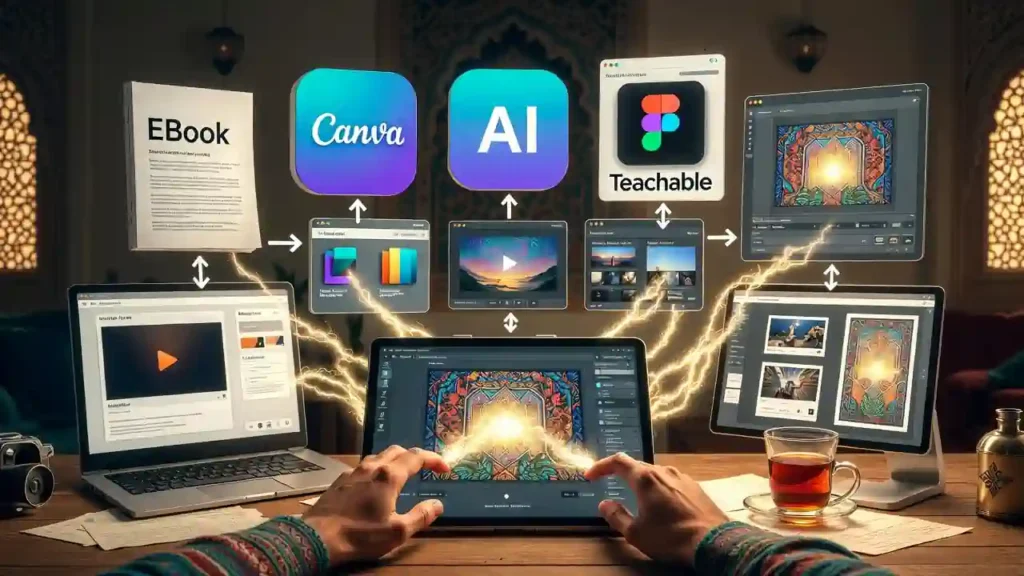
.jpeg "Earn Passive Income with Wall Art")
The Complete Guide to Selling Digital Products for Beginners in 2026 Hello! In today’s fast-paced world, selling digital products has become a golden opportunity for beginners who wish to build passive income without the need for physical inventory or high production costs. With the advancement of technology, especially in 2026, where the digital products market is expected to reach approximately $18.9 billion by 2033, growing at a compound annual growth rate of 11.8%, anyone can start easily. Furthermore, the digital commerce platforms market is projected to reach $16.1 billion in 2026, with growth up to $92.2 billion by 2036, a growth rate of 19.1%. This comprehensive guide will provide you with everything you need to get started, from understanding the types to marketing and management, with practical tips specifically designed for beginners in regions like Morocco, where the digital economy is growing rapidly.

Whether you are in Tangier or anywhere else, you can benefit from recent trends like Artificial Intelligence (AI) and decentralized commerce (Web3). We will cover all aspects step by step, with real examples of successes in 2026.
Section 1: Understanding the Types of Digital Products
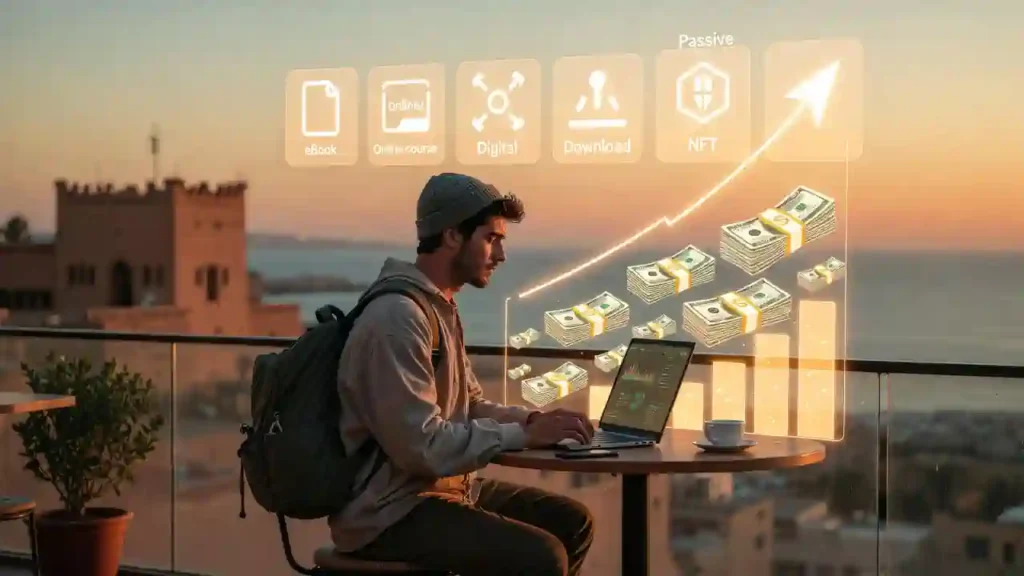
Digital products are anything that can be downloaded or accessed online, such as files or virtual services. In 2026, these products have become more diverse thanks to new technologies, and they include:
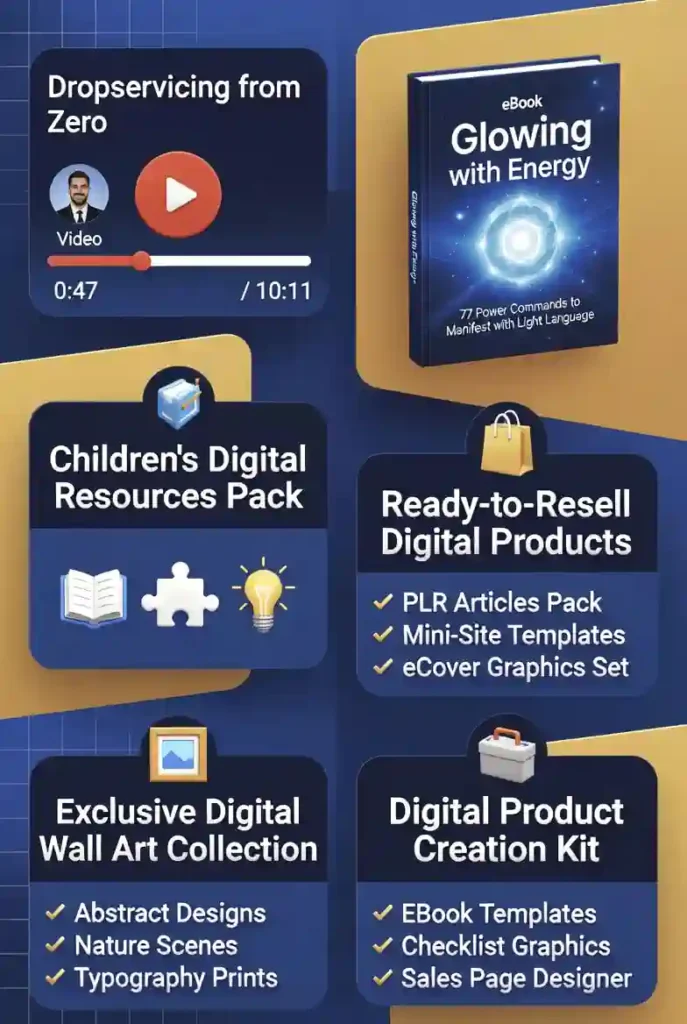
- Educational Content: This includes online courses, eBooks, and virtual workshops. For example, courses like the “Dropservicing Course from Scratch” which helps beginners learn digital services, available at bit.ly/se28. These products generate high profits because they can be sold many times without additional costs.
- Creative Products: This includes graphic designs, templates for websites or social platforms, music, photos, and videos. In 2026, digital art canvases have become popular, such as the “Ready-to-Launch Art Canvas Project” available at www.ostadmaroc.com/2025/10/12000-exclusive-wall-art.html, which can be printed or used as digital decor.
- Software and Tools: Apps, plugins for software like WordPress, or AI editing tools. With the spread of AI, products like automated text or image generators are in high demand.
- Entertainment Products: Digital games, NFTs (Non-Fungible Tokens), or Augmented Reality/Virtual Reality (AR/VR) content. For example, “Digital Resources for Teaching Children” like educational games, available at www.ostadmaroc.com/2025/03/35000.html.
- Digital Services: Virtual consultations or subscriptions to exclusive content. This also includes “Ready-to-Sell Digital Products” like pre-made marketing bundles, available at www.ostadmaroc.com/2025/08/money.html.
In 2026, trends include AI-powered products like automated personalized lessons, and decentralized products via Blockchain. To choose a suitable type, analyze your personal skills and use tools like Google Trends to gauge demand in your local market, such as Morocco where interest in digital education is increasing.
Section 2: How to Create a Digital Product from Scratch
Start by identifying an idea that solves a real problem. For example, if you are interested in education, create a course like the “Dropservicing Course from Scratch” that covers digital services from the beginning.
- Research and Planning: Study competitors using tools like Ahrefs, and survey audience opinions on social media. In 2026, use AI to analyze predictive data.
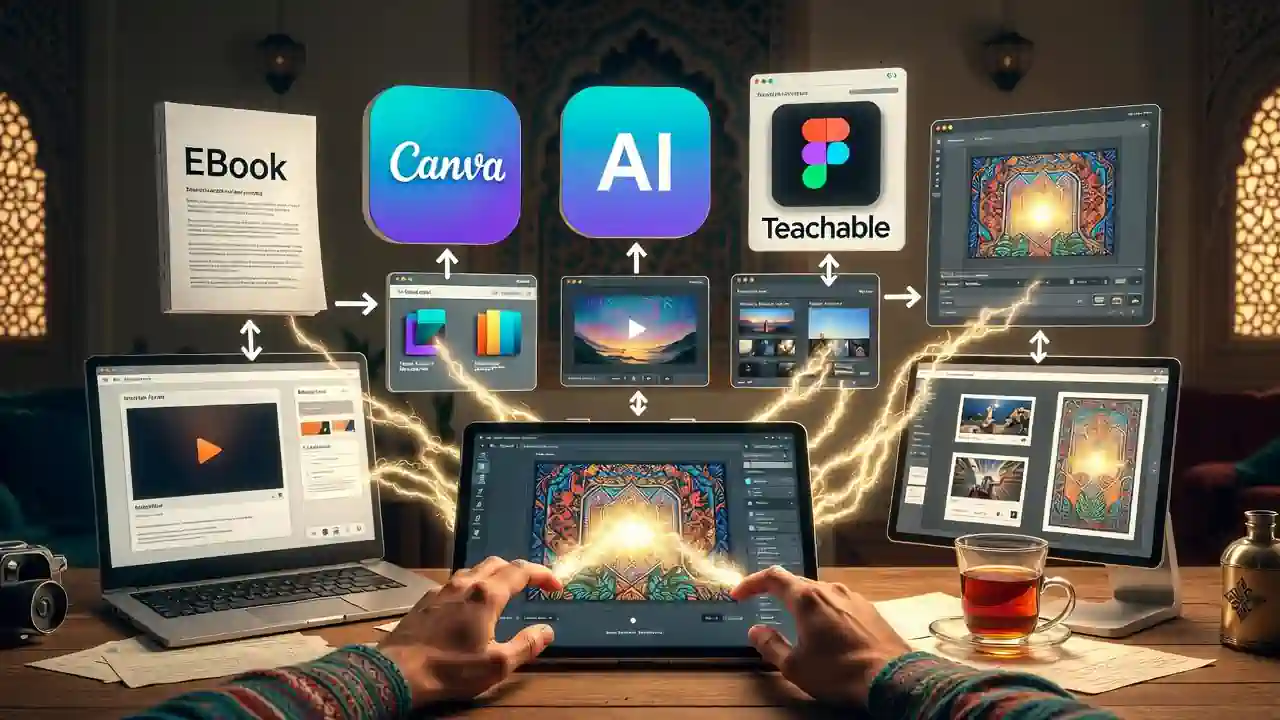
- Creation Tools: For books, use Google Docs or Canva; for courses, Teachable or Thinkific; for designs, Figma with AI support; for software, no-code tools like Bubble. For example, you can create an eBook like “Download the Energetic Commands Book” which focuses on positive energy, available at bit.ly/55kitab.
- Quality Assurance: Test the product, gather feedback, and use AI for automated editing. Start with a simple product, and learn from free resources on YouTube.
Challenges include avoiding copying and protecting intellectual property rights, but with persistence, you can achieve success like Notion template sellers who made hundreds of thousands in 2026.
Section 3: Choosing Platforms to Sell Digital Products
In 2026, popular platforms include:
- E-commerce Stores: Shopify with AI integration for recommendations, or WooCommerce.
- Digital Marketplaces: Etsy for creative goods, Gumroad for digital products, Teachable for courses. For example, you can sell “Ready-to-Sell Digital Products” on Gumroad.
- Social Platforms: Instagram Shops, TikTok Shop, or X Commerce, where 26% of marketers plan to sell products directly on social media.
- Decentralized Platforms: OpenSea for NFTs.
| Platform | Fees | Audience | Features |
|---|---|---|---|
| Shopify | 2.9% + 30¢ | Global | AI recommendations, Crypto payment |
| Gumroad | 10% | Creators | Easy for beginners |
| Teachable | 5% | Educators | Interactive courses |
Set up an account by adding products and integrating payment via Stripe or PayPal. Focus on SEO to increase visibility.
Section 4: Marketing and Promotion Strategies
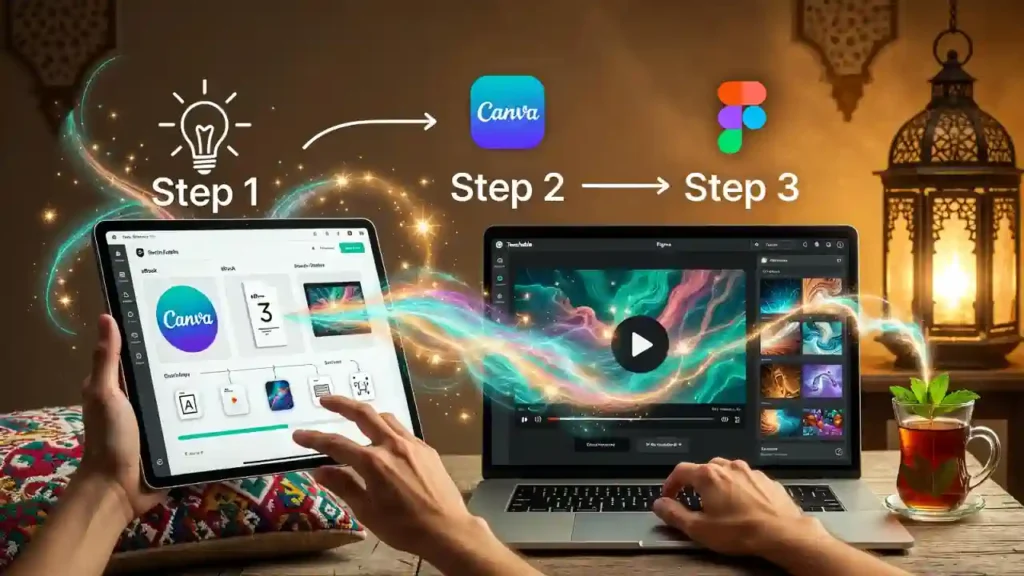
From Idea to Launch – Creating Your Digital Product in 2026
Build an audience via email lists with Mailchimp, and social media. Use content marketing like blogs or short videos, with a focus on video in 2026.
- SEO and SEM: Optimize for search engines, Google Ads campaigns.
- Social Media: Viral campaigns, collaborate with influencers, including AI influencers.
- Affiliate Marketing: Get others to promote your products, like “Digital Resources for Teaching Children.”
In 2026, use AR for virtual product try-ons, and measure success with Google Analytics. Avoid over-advertising and focus on value.
Section 5: Managing Sales and Operations
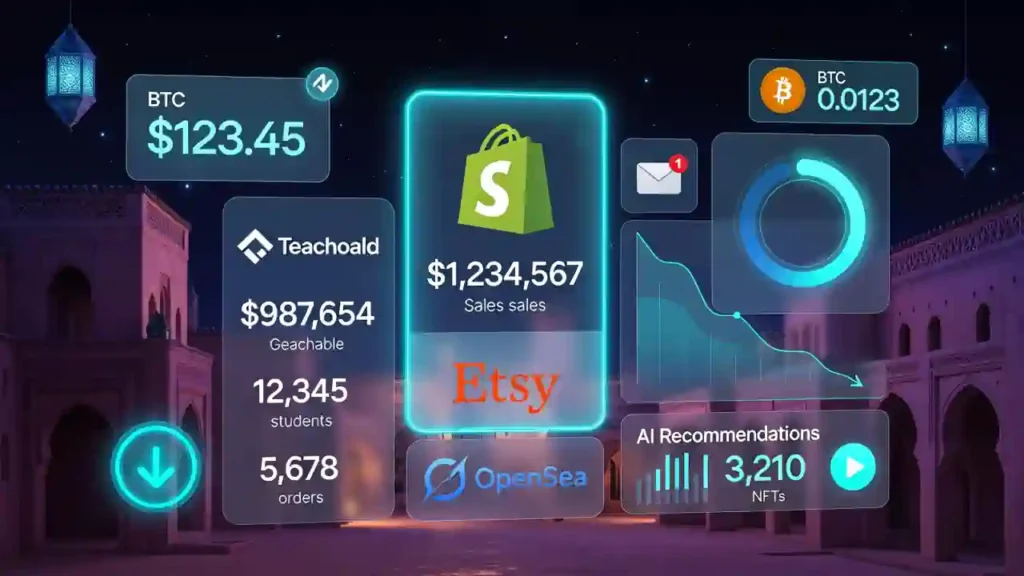
Automate the sales process with secure payment and instant delivery. Manage finances by tracking revenue and taxes, especially digital VAT. Use Zapier for automation and QuickBooks for accounting. To scale, add new products like the “Art Canvas Project.”
Section 6: Legal and Ethical Aspects
Protect your products with copyrights, and comply with GDPR. In 2026, focus on AI ethics and NFT regulation. Use free legal templates.
Section 7: Case Studies and Successful Examples
In 2026, Estate Template Co. succeeded in selling Notion templates for $400,000. Similarly, a seller of “How to Dominate Twitter” made 2000 sales at $49 each. Lesson: Focus on solving real problems.
Section 8: Common Challenges and Solutions
Challenges include competition; the solution: continuous learning and partnerships. Use AI for improvement.
Section 9: Future Trends and Tips for Sustainability
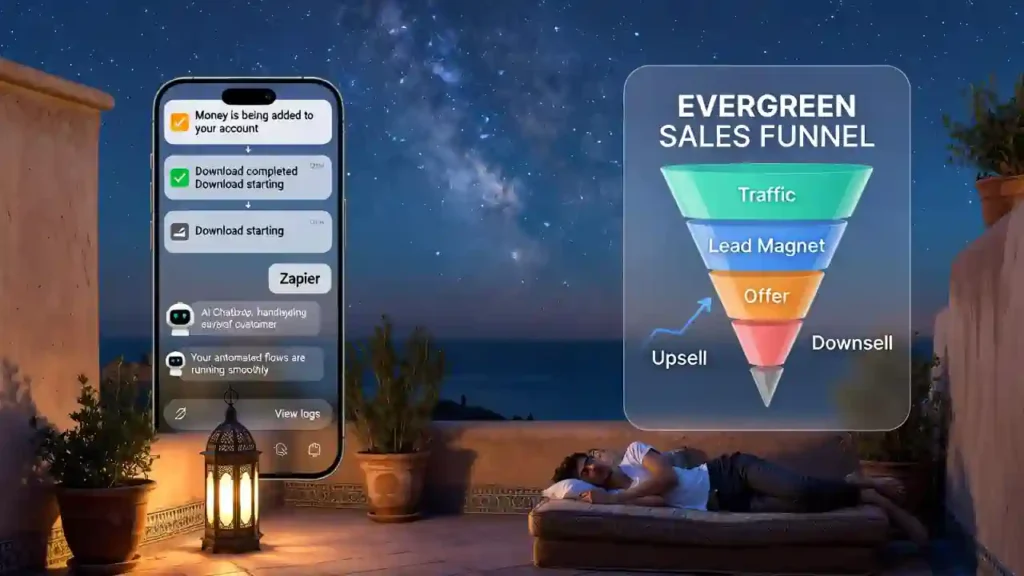
In 2026 and beyond, the spread of Web3 and AI-generated products. Join communities like Reddit, and read books like “The Lean Startup.”
Conclusion
Selling digital products is easy and with minimal costs. Start today with a simple product, like exploring “Download the Energetic Commands Book” or others. What do you think? Do you have a ready idea?
Frequently Asked Questions (FAQ)
- How much money do I need to start? Less than $100 for basic tools.
- Can I sell in Morocco? Yes, through global platforms while focusing on the local market.
- How long does it take to make the first sale? It can take anywhere from weeks to 3 months, depending on effort and promotion.
- What are the best digital products for beginners in 2026? Profitable and easy options include templates (Notion, Canva), short e-books/courses, digital art, and educational resources.
- How do I protect my digital products from theft? Use watermarks, temporary download links, and consider simple copyright registration. Focus on providing continuous value.
- Can I start without a large audience? Yes, use platforms with internal search (Etsy, Gumroad) and focus on SEO and organic traffic from Pinterest/YouTube.
- Do I need high technical skills? No, many no-code tools and AI assistants are available to help with creation and marketing.
- How do I handle refunds? Set a clear policy (e.g., no refunds after download) and provide good customer support. Platforms like Gumroad/Shopify help manage this.
- What are common mistakes beginners make? Waiting for perfection, not marketing enough, ignoring the audience, and giving up too soon.
- What is the earning potential? Realistically, beginners can earn $500–$5000/month after 3–6 months of consistent effort. Successful sellers can make much more.